
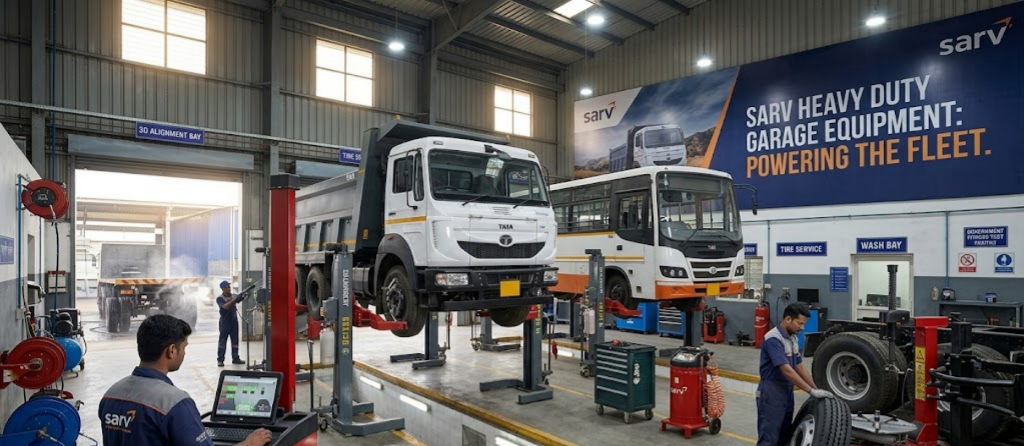
The commercial transport sector forms the backbone of India’s growing economy. With millions of trucks, buses, trailers, and heavy construction vehicles running on national highways, the demand for specialized maintenance hubs is higher than ever. Starting a commercial garage requires proper layout planning, technical knowledge, and quality machinery. If you want to know how to start a heavy vehicle service center in India, having a clear understanding of required tools, machinery costs, and workshop setups is the most crucial step toward building a profitable business.
Why the Heavy Vehicle Service Industry in India Is Booming
Several macroeconomic and regulatory shifts have transformed the Indian commercial vehicle servicing landscape into a high-margin enterprise:
- Rise of BS6 Fleet Technology: Modern trucks and buses feature complex electronics, common rail diesel injection (CRDI) systems, SCR units, and Diesel Particulate Filters (DPF) that require specialized diagnostic and maintenance tools rather than traditional roadside repairs.
- Expanding Logistics Networks: The growth of e-commerce, express logistics, and national highway corridors has increased daily fleet mileage, necessitating frequent scheduled maintenance.
- Strict Vehicle Scrappage & Fitness Rules: Government mandates require mandatory automated fitness testing and strict emission compliance for commercial vehicles, driving fleet operators toward organized workshops.
Step-by-Step Plan to Set Up a Commercial Vehicle Workshop
Setting up a heavy commercial vehicle (HCV) workshop requires strategic planning before purchasing machinery.
+-----------------------------------------------------------------------+
|                    Business Planning & Registration                   |
+-----------------------------------------------------------------------+
                                    |
                                    v
+-----------------------------------------------------------------------+
|                Location Selection & Layout Design                     |
+-----------------------------------------------------------------------+
                                    |
                                    v
+-----------------------------------------------------------------------+
|                 Procurement of Core Workshop Equipment                |
+-----------------------------------------------------------------------+
                                    |
                                    v
+-----------------------------------------------------------------------+
|                Technician Recruitment & Software Setup                |
+-----------------------------------------------------------------------+
                                    |
                                    v
+-----------------------------------------------------------------------+
|                  Grand Opening & Fleet B2B Outreach                   |
+-----------------------------------------------------------------------+
1. Land & Location Selection
- Space Requirement: Minimum 10,000 to 25,000 sq. ft. is required to accommodate long multi-axle trailers, turning radiuses, washing bays, and parking space.
- Ideal Location: Near national highways (NH), transport hubs, logistics parks, or industrial bypass roads where heavy vehicle traffic is dense.
2. Legal Approvals and Licenses
- Business Registration (Private Limited, LLP, or Partnership)
- GST Registration
- Trade License from local municipal authorities
- Pollution Control Board (PCB) Consent to Establish & Operate
- Electricity Connection (3-phase high load connection)
Essential Equipment Checklist for a Heavy Vehicle Service Center
To provide full-service capability for heavy commercial vehicles, your workshop must be equipped across five major operational zones.
Zone 1: Lifting & Underbody Inspection Equipment
Heavy commercial vehicles weigh anywhere from 10 to 55 tons. Safe lifting mechanisms are mandatory for underbody suspension, gearbox, and differential work.
- Heavy-Duty Column Lifts (Mobile or Fixed): Electro-hydraulic wireless column lifts that synchronized-lift multi-axle trucks simultaneously.
- Pneumatic Pit Jacks: Mounted inside concrete service pits to lift individual axles safely during wheel and brake servicing.
- Heavy-Duty Hydraulic Floor Jacks: High-capacity (20-ton to 50-ton) portable jacks for quick bay inspections.
Zone 2: Wheel, Tire & Alignment Systems
Commercial vehicle tires represent a major operating cost for fleet owners. Offering precision wheel services attracts high-volume B2B clients.
+-----------------------------------------------------------------------+
|                     Commercial Tire Service Bay                      |
+-----------------------------------------------------------------------+
|                                                                       |
|  +--------------------+   +--------------------+   +---------------+  |
|  | Commercial Truck   |   | Heavy Duty Truck   |   | Pneumatic     |  |
|  | 3D Wheel Aligner   |   | Tire Changer       |   | Wheel Balancer|  |
|  +--------------------+   +--------------------+   +---------------+  |
|                                                                       |
+-----------------------------------------------------------------------+
- Heavy-Duty Truck Tire Changer: Hydraulic tire changers built to handle tubeless and tube-type rims from 14 to 26 inches.
- Commercial 3D Truck Wheel Alignment Machine: CCD or camera-based alignment systems capable of measuring multi-axle trucks, trailers, and buses.
- Dynamic Heavy-Duty Wheel Balancer: Handles heavy tire assemblies up to 200 kg to prevent uneven tread wear and vibration.
Zone 3: Engine, Diagnostic & Exhaust Maintenance
With BS6 vehicles dominating the roads, diagnostic tools are non-negotiable for modern workshops.
- Universal Multi-Brand Commercial Vehicle Scanner: Diagnoses ECU fault codes, performs sensor calibrations, and resets service lights across Tata, Leyland, BharatBenz, Volvo, and Mahindra fleets.
- DPF Cleaning Machine: Advanced washing and drying equipment to clear blocked particulate filters without damaging internal ceramic cores.
- Injector & Common Rail Test Benches: Precise calibration equipment to test and repair high-pressure fuel injectors.
Zone 4: Washing, Lubrication & Fluid Management
Efficient fluid handling speeds up routine oil changes and prevents floor contamination.
- Automatic Chassis & Truck Washers: High-pressure (150–200 bar) washing systems for removing heavy mud from underbodies and frames.
- Pneumatic Oil Dispensing Systems: Wall-mounted reels with digital metering guns for engine oil, gear oil, and coolant dispensing.
- Waste Oil Drainers & Collectors: Mobile suction tanks to capture used oil cleanly inside service bays.
Zone 5: Air Compressors, Body Shop & Service Bay Tools
- Industrial Screw Air Compressor: Minimum 15 HP to 25 HP rotary screw compressor with air dryer to run pneumatic impact wrenches, tire inflators, and paint booths continuously.
- Heavy-Duty Pneumatic Impact Wrenches: 1-inch drive air impact guns delivering up to 2500 Nm torque for stubborn wheel lug nuts.
- Hydraulic Shop Presses: 50-ton to 100-ton hydraulic bench presses for bearing, bushing, and kingpin removal.
Equipment Cost & Investment Breakdown
Setting up a full-scale heavy vehicle workshop in India involves capital expenditure across land development, machinery, and working capital:
| Category | Description | Estimated Cost (INR) |
| Lifting & Pit Setup | Mobile column lifts, pit jacks, hydraulic stands | ₹8,000,000 – ₹1,500,000 |
| Tire & Alignment | Commercial 3D aligner, heavy tire changer, balancer | ₹1,200,000 – ₹2,200,000 |
| Diagnostics & DPF | Multi-brand scanner, automatic DPF cleaning machine | ₹600,000 – ₹1,400,000 |
| Air & Lubrication | Rotary screw compressor, pneumatic oil guns, drainers | ₹400,000 – ₹800,000 |
| Hand Tools & Misc | 1-inch impact guns, torque wrenches, shop presses | ₹300,000 – ₹600,000 |
| Total Machinery Capex | Core Equipment Investment | ₹3,300,000 – ₹6,500,000 |
(Note: Land acquisition/lease costs and civil construction are additional depending on city tier and location.)
For technical specifications on commercial vehicle safety rules and axle load limits, refer to the officialAutomotive Research Association of India (ARAI)technical portal.
Key Strategies for Workshop Profitability
- Tie Up with Logistics Fleets: Offer Annual Maintenance Contracts (AMCs) to local fleet operators, transport contractors, and bus operators to ensure steady monthly revenue.
- Focus on BS6 Specialization: Position your garage as an expert center for DPF restoration, AdBlue system repairs, and ECU diagnostics.
- Stock Quality Spare Parts: Partner with reliable commercial equipment and spare part suppliers to ensure quick turnaround times without keeping vehicles waiting for basic components.
Conclusion
Learning how to start a heavy vehicle service center in India requires balancing robust civil planning with modern diagnostic technology. As commercial transport shifts toward high-tech BS6 platforms, fleet owners are actively looking for organized, well-equipped service centers that can minimize vehicle downtime.
By investing in high-quality commercial lifting gear, 3D axle alignment, diagnostic scanners, and dedicated DPF cleaning machines, your garage can deliver fast, reliable repairs and secure long-term, high-margin fleet contracts.
Building or Upgrading Your Commercial Vehicle Service Center?
Get complete garage planning support and top-quality equipment under one roof. At Garage Shop 24×7, we supply high-grade commercial wheel aligners, tire changers, heavy-duty jacks, diagnostic tools, and genuine spare parts across India.
- Website: https://garageshop24x7.com
Request a free workshop equipment quotation today!
Frequently Asked Questions (FAQs)
How much land is required to open a heavy vehicle service center in India?
A commercial truck or bus workshop typically requires a minimum plot area of 10,000 to 25,000 square feet. This provides sufficient room for long multi-axle vehicle entry, service bays, turning radiuses, washing bays, and parked fleets.
What is the average total cost to start a commercial vehicle garage in India?
Excluding land lease or purchase costs, the machinery and equipment setup cost ranges between ₹35 Lakhs to ₹70 Lakhs depending on whether you choose semi-automatic or fully automatic diagnostic, alignment, and lifting equipment.
Why is diagnostic and DPF cleaning equipment essential for BS6 truck garages?
BS6 diesel commercial vehicles rely on complex electronic sensors, SCR systems, and Diesel Particulate Filters. Without universal ECU scanners and machine-based DPF cleaning, a workshop cannot troubleshoot power losses, dashboard fault lights, or exhaust blockages.
Is wheel alignment necessary for heavy commercial vehicles?
Yes. Proper 3D multi-axle wheel alignment on heavy trucks and buses reduces uneven tire wear, extends tire life by up to 30%, improves fuel economy, and enhances highway steering safety for commercial transport fleets.