

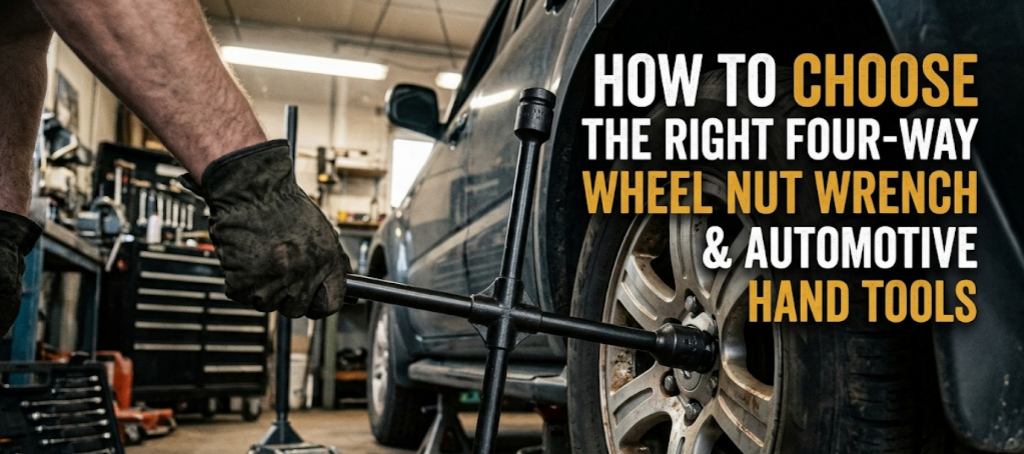
Choosing the right four-way wheel nut wrench and automotive hand tools can make the difference between a fast, safe wheel service and a stripped lug nut, rounded socket, or delayed bay turnaround in a busy Indian garage. Whether you run a neighborhood tyre puncture shop, a multi-brand car service center, or a commercial fleet maintenance yard, reliable hand tools keep technicians working smoothly every single day. While power tools and pneumatic impact Four-Way Wheel Nut Wrench handle heavy-duty shop tasks, manual hand tools remain the backbone of quick roadside checks, tight wheel-well access, torque verification, and everyday mechanical repairs.
In this guide, we break down how to pick the right cross wrench and supporting automotive hand tools for Indian working conditions, what materials and build specs matter most, and how to build a practical toolkit that brings steady commercial value to your workshop.
Indian automotive workshops face tougher operating conditions than many clean, climate-controlled service centers abroad. Monsoon humidity, road dust, rusted wheel studs, over-torqued lug nuts from roadside mechanics, and continuous daily shifts put serious stress on everyday tools.
A well-balanced cross wrench gives technicians steady two-handed leverage to break stubborn wheel nuts loose without slipping off the hex flats. Slipping wrenches can injure knuckles, round off soft nuts, or cause a vehicle on a jack to shift unexpectedly. When paired with dependable four-way wheel nut wrench options, technicians can loosen and snug wheel nuts faster and more safely during peak rush hours.
Cheap, poorly hardened hand tools bend under load, crack at welded joints, or wear out quickly on rusted fasteners. Replacing broken tools repeatedly eats into workshop profits and slows down bays. Standardizing on durable workshop tools—and aligning your bay setup with quality standards recognized by bodies such as the Bureau of Indian Standards (BIS) and automotive safety frameworks promoted by the Ministry of Road Transport and Highways (MoRTH)—helps maintain safer, more consistent service operations.
Not every cross wrench fits every vehicle on Indian roads. Passenger hatchbacks, sedans, SUVs, pickups, and light commercial vans use different lug nut sizes and wheel rim designs, so selecting the right size and build quality is essential.
Most standard Four-Way Wheel Nut Wrench feature four common metric or imperial hex sizes across their arms—frequently covering sizes such as 17 mm, 19 mm, 21 mm, and 23 mm (or 13/16″). Before buying.check the vehicles your bay services most often:
- Hatchbacks, Sedans, and Compact SUVs: Commonly use 17 mm or 19 mm lug nuts, with some models using 21 mm.
- Larger SUVs, MUVs, and Pickups: Often require 19 mm, 21 mm, or 23 mm sockets, plus deeper clearance around alloy wheel pockets.
- Mixed Multi-Brand Workshops: Having multiple four-way wrenches covering both common car sizes and heavier commercial sizes prevents technicians from wasting time hunting for adapters.
The strength of a Four-Way Wheel Nut Wrench depends heavily on its steel alloy and how the four arms meet at the center:
- Chrome Vanadium Steel: Offers high tensile strength, toughness, and resistance to twisting or rounding under high torque, making it a strong choice for daily workshop use.
- Heat-Treated Alloy / Carbon Steel: Can work well for lighter tasks if properly heat-treated, though lower-grade steel may flex or wear faster under heavy commercial duty.
- Solid Forged or Reinforced Welded Hub: Look for a thick, well-finished center junction with clean welds and no visible gaps or porosity.
- Corrosion-Resistant Finish: Chrome, satin, or black oxide finishes help resist rust and oil stains in humid or dusty bays.
Longer arms provide greater rotational leverage with less physical strain, especially on rusted or over-tightened nuts. However, overly long arms can feel awkward in tight wheel arches or cramped storage racks. Look for balanced arm lengths, smooth non-slip or knurled grip zones, and deep enough socket wells so the Four-Way Wheel Nut Wrench seats squarely over the nut without slipping.
Deep-dish alloy wheels with narrow lug recesses sometimes reject thick-walled sockets. Checking socket outer diameter and wall thickness saves technicians from scratching expensive customer rims.
A four-way wheel nut wrench shines during wheel removal and refitting, yet a complete service bay needs complementary hand tools to handle fastener removal, suspension work, brake checks, and general repairs smoothly.
- Combination Spanners (Open-End & Ring): Essential for bracket bolts, caliper guide pins, battery terminals, and engine bay fasteners where a cross wrench cannot reach.
- Ratchets and Socket Sets: Speed up repetitive disassembly and reassembly on suspension components, shields, and underbody covers.
- Torque Wrenches: Crucial for tightening wheel nuts and critical fasteners to manufacturer specifications rather than guessing by feel—helping prevent warped brake rotors, over-stressed studs, or loose wheels.
- Combination, Long-Nose, and Circlip Pliers: Useful for clips, pins, hoses, and electrical connectors across tyre and mechanical bays.
- Slotted and Phillips Screwdrivers: Needed for trim panels, covers, hose clamps, and sensor housings.
- Pry Bars: Helpful for separating stuck parts, checking suspension play, or gently levering components during tyre and brake servicing.
- Dead-Blow and Ball-Peen Hammers: A dead-blow hammer delivers controlled impact without damaging finished surfaces, while a ball-peen hammer supports metalworking and punch tasks.
- Wheel Hub / Bearing Pullers: Save time and prevent damage when removing stubborn hubs, drums, or seized components.
Whether you are opening a new tyre bay, expanding an existing garage, or stocking fleet service vans, buying tools in a planned way keeps your budget disciplined and your workflow fast.
Even high-grade tools wear out eventually. Keep wrenches and sockets organized on wall racks or tool trolleys so missing items are spotted immediately, wipe down tools after oily jobs, and inspect sockets regularly for cracks or rounded inner corners.
| Workshop Need | What to Prioritize | Key Benefit |
| Fast Wheel Nut Loosening & Snugging | Multi-size four-way cross wrench with strong hub & clean hex fit | Faster wheel swaps and fewer rounded nuts |
| Tight Alloy Rim Clearance | Slimmer socket profile & proper hex depth | Reduces risk of scratching customer alloy wheels |
| Accurate Wheel & Bolt Tightening | Calibrated torque wrench + hand tool checks | Avoids over-tightening, stud stretch, or under-torquing |
| All-Around Bay & Fleet Repairs | Combination spanners, ratchets, pliers & hammers | Covers everyday mechanical tasks without bay delays |
Picking the right four-way wheel nut wrench and automotive hand tools comes down to matching size coverage, steel durability, leverage, and safety to the real vehicles your team services every day. By investing in dependable tools and pairing them with proper maintenance habits, your workshop can cut turnaround times, protect customer vehicles, and build stronger repeat business.
According to the Automotive Research Association of India (ARAI), strict adherence to BS6 emission standards and periodic exhaust after-treatment maintenance are critical for reducing particulate emissions across India’s commercial transport sector.
Ready to Upgrade Your Workshop or Tyre Bay Tools with Four-Way Wheel Nut Wrench
Browse our Four-Way Wheel Nut Wrench collection and essential garage equipment to equip your technicians with durable tools built for everyday Indian workshop demands. Contact our team today for product guidance, bulk workshop orders, and quick dispatch details!
Frequently Asked Questions
1. What is a four-way wheel nut wrench used for?
A four-way wheel nut wrench (also called a cross wrench) is a four-arm manual tool with different socket sizes on its ends, used to loosen and tighten wheel lug nuts quickly using two-handed leverage.
2. Which lug nut sizes are most common on Indian cars and SUVs?
Many hatchbacks, sedans, and compact SUVs use 17 mm or 19 mm lug nuts, while larger SUVs, MUVs, and utility vehicles often use 19 mm, 21 mm, or 23 mm depending on the manufacturer and wheel type.
3. Should a workshop use a torque wrench after using a four-way wrench?
Yes. A four-way wrench is great for breaking nuts loose and spinning them on or off quickly, while a torque wrench helps tighten lug nuts accurately to vehicle maker specs without over-torquing.
4. Why do cheap wheel wrenches slip or round off lug nuts?
Low-grade steel or loosely fitted sockets can flex or slip on rusted or tightly torqued nuts, rounding the corners of the lug nut and creating a safety hazard during wheel removal.
5. How can workshops extend the life of automotive hand tools?
Keep tools clean and dry, avoid using cheater pipes beyond tool ratings unless designed for them, store sets neatly in trolleys or racks, and inspect sockets and joints regularly for wear or cracks.